Festival
Festa Major: How to Join a Catalan Town Festival Respectfully
Read a festa major programme, choose events, handle fire and crowds, and take part without treating a neighbourhood tradition as a show.
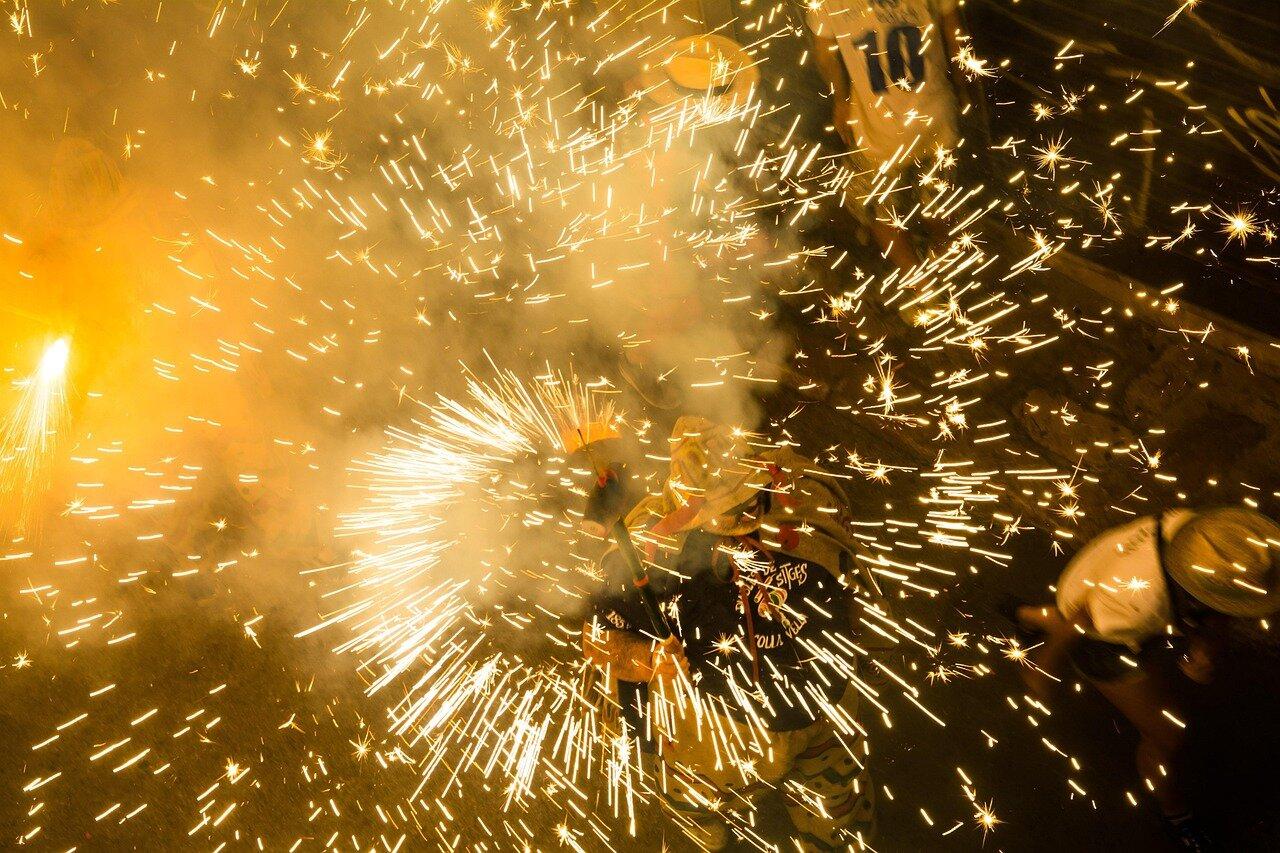
A festa major is the moment a town or neighbourhood tells its story in public. The story may include giants, human towers, communal meals, dances, children’s workshops, concerts, religious observance and fire. It is not a single Catalan product with a standard timetable. Each community decides what belongs in its programme and how the streets will carry it.
Visitors are usually welcome. The useful posture is neither anxious distance nor instant participation: read the programme, understand what kind of event is beginning, and notice how residents use the space before moving closer.
Start with the whole programme
Download the current municipal or organisers’ programme rather than an unofficial “top five” list. Look for pregó (opening address), cercavila (moving parade), gegants, castellers, sardanes, sopar popular and correfoc. The words describe different relationships between performers and crowd; they are not interchangeable photo opportunities.
The Gràcia festival protocol, for example, sets named traditional events within a particular neighbourhood sequence. The 2026 Nou Barris programme spread activity across the district and several days. Neither should be used as a timetable for another place or year; together they show why the host’s own document matters.
For a first visit, choose one daytime tradition and one evening event. Leave room for lunch and a rest. Most public street events are free, but communal dinners and limited-capacity performances may need tickets even when the festival itself does not. A realistic day costs €10–35 per person for food, drinks and small ticketed activities, excluding transport or accommodation.
Learn the edge of the event
Arrive at a popular square 30–45 minutes early. Find the performance area, emergency lanes and a meeting point outside the dense core. Keep doorways, shop access and residents’ chairs clear. A balcony is someone’s home, not an unofficial grandstand; a parked bicycle is not a camera platform.
If castellers are assembling, do not push toward the pinya or join it without an explicit invitation and instruction. If giants are turning through a narrow street, give their carriers space to see and manoeuvre. During a solemn procession, offering or religious service, follow the surrounding tone rather than continuing a loud conversation because the event is outdoors.
Ask before taking close photographs of identifiable children. Wide crowd scenes usually tell the festival story better and interfere less. Avoid holding a phone above other people for long periods, especially where the crowd itself is moving.
Fire requires a decision before it starts
A correfoc is not simply a parade with brighter lighting. Organisers define routes, participant areas and clothing advice. Read those instructions in the current programme. If entering a designated fire zone is permitted, long sleeves and trousers in natural fibres, closed shoes, covered hair and eye awareness reduce risk. They do not remove it.
Spectators who do not want sparks belong behind the published boundary or farther along the route. Children, people sensitive to smoke or loud noise, and anyone uncomfortable in compressed crowds need distance and hearing protection. Never bring a stroller into a moving fire area. Do not throw water: it can change how hot material behaves and may endanger participants.
The right moment to step back is before the crowd closes, not after panic begins. Agree that anyone in the group can call the exit. Leave sideways toward the preselected wider street and keep moving beyond the bottleneck.
Eat and travel on the festival’s clock
Restaurants beside the main route fill early and may change service. Reserve a table or eat before the busiest period. Carry water, some cash and only a small zipped bag. Reusable cups should go back to their return points; litter stays with you until a bin is available.
Public transport is usually easier than driving, but the ordinary stop may move behind a street closure. Save the temporary stop and last departure before the evening begins. If staying locally, ask the host about vehicle access and noise before arrival. Move a parked car before barriers appear, not while a parade is approaching.
Alcohol and late-night transport deserve one decision. Pace drinks, appoint a sober driver if necessary and keep a taxi number as a fallback rather than an assumption. A festival can run late; the last scheduled train generally does not wait for an encore.
Leave the neighbourhood as you found it
Use public toilets, return cups and avoid resting on residential thresholds. Spend something with a local café, bakery or festival association when practical. If an event is cancelled for weather or safety, follow the organiser’s channel and accept the change rather than searching for an unofficial version elsewhere.
The aim is not to prove that you participated in every famous tradition. A good first festa major visit ends with an understanding of who organised the day, why its events happen in that order and how the neighbourhood changed to host them—without residents having to repair your presence afterward.
Dates, routes, capacity rules and safety instructions must be confirmed in the host’s current programme.
Related guides
- Three Kings in Catalonia: Parade, Gifts and Visitor Etiquette
Watch a Catalan Three Kings cavalcade with context, understand the pages and letters, and keep the public parade separate from private family gifts.
- Your First Catalan Aplec: How to Join Respectfully
Read an aplec programme, reach its rural setting and understand when a meal, dance or religious act is public, reserved or participatory.
- La Patum de Berga: A First Visit to Fire and Crowd
Choose the right Patum session, understand Plaça de Sant Pere’s crowd and fire, and secure a walkable bed or confirmed return.
Are you in the know?
Receive new articles, local updates, and occasional offers from selected partners. We never share your email address. Unsubscribe at any time.
By subscribing you agree to our privacy policy.