Culture
Your First Catalan Aplec: How to Join Respectfully
Read an aplec programme, reach its rural setting and understand when a meal, dance or religious act is public, reserved or participatory.
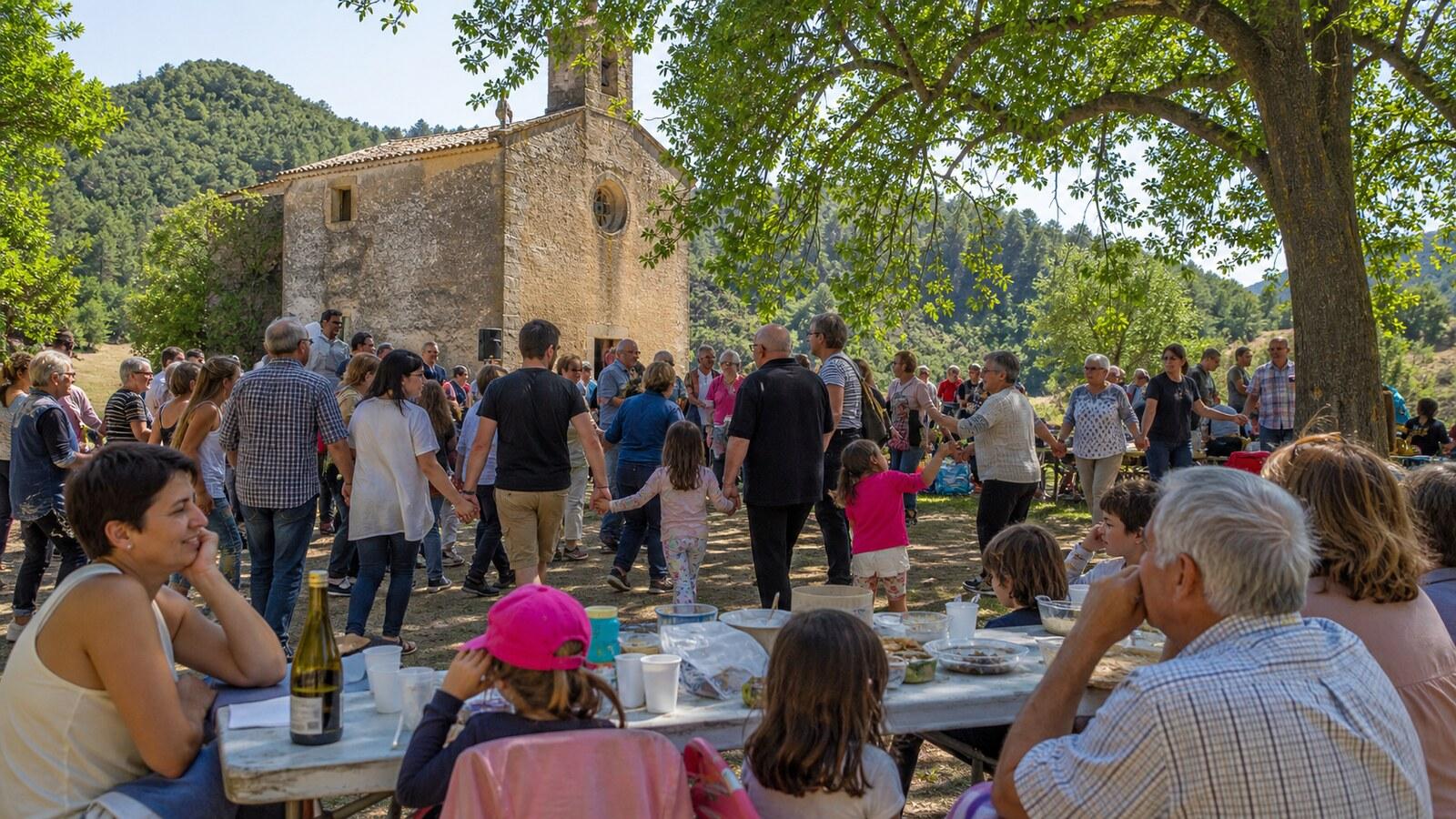
An aplec is a gathering, not one standardized festival format. It may centre on an hermitage, a saint’s day, sardanes, a walk, a communal meal or several of those things at once. The first act of good etiquette is therefore practical: read the organizer’s programme and stop expecting a generic folkloric show.
Choose a named aplec, not an idea
Start with a municipal, parish or association announcement for the current year. Confirm the date, rural location, access road or walking route, meal-ticket deadline and weather channel. Search the programme for words such as missa, ofici, ballada, dinar popular, arrossada, caminada and autocar. Each names a different kind of participation.
The Generalitat’s Catalan Cultural Heritage portal provides context for monuments and living traditions across the territory, but the host organization remains the source for an individual gathering.
Allow half a day for a compact village event and a full day when the gathering requires a walk to an hermitage or includes lunch. Public acts may be free; a meal or organized bus can bring the practical budget to €15–35 per person.
Arrival is often part of the gathering
Some aplecs begin with a procession or group walk. Others expect people to reach a rural clearing independently. If an official bus or adapted parking is offered, reserve it when required. Informal roadside parking can block residents, emergency access and the very procession people have come to see.
Bring water, sun and rain protection, shoes for the stated terrain and cash for a small association stall. Toilets may be temporary or limited. A reusable cup or plate belongs in the bag only if the organizer requests it; do not impose your own zero-waste system on volunteers already running a service plan.
Arrive early enough to watch how the space is divided. An altar area, musicians’ circle, food queue and family picnic are not interchangeable public zones. The clearest clue is how local participants move before the main act begins.
Religious acts and public festivities can share the day
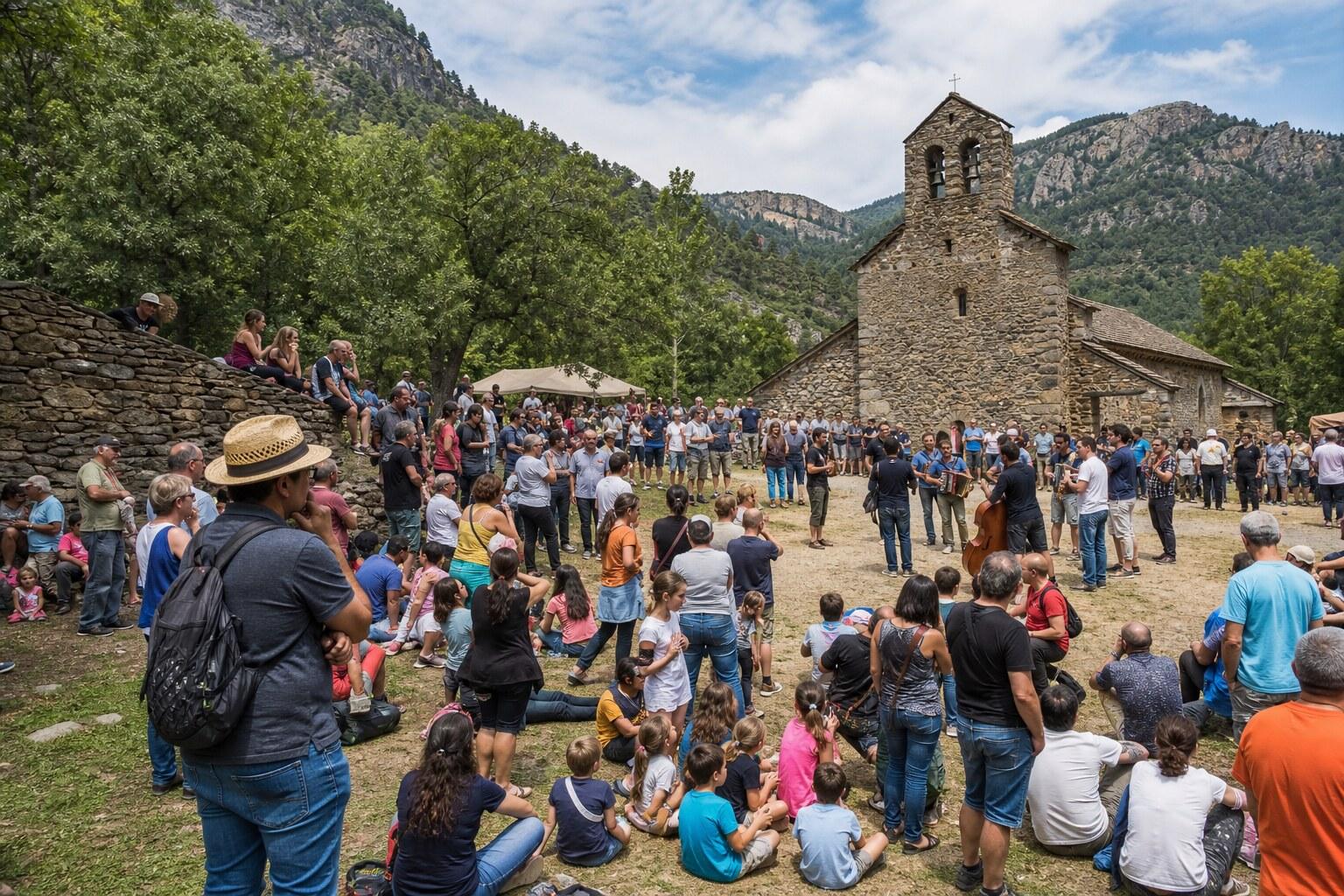
An aplec linked to an hermitage may include Mass or an offering. You can usually observe quietly when the door and programme make the act public, but avoid walking around for photographs, speaking through prayers or treating devotional objects as props. If capacity is tight, let regular worshippers enter first.
The atmosphere may become social immediately afterward, with music, giants or sardanes. That change does not make the religious component theatrical. Let each part retain its own tone rather than narrating the entire day as “a festival.”
Check a small-group introduction to Catalan traditions only if it leads to a real organized event; a commercial overview cannot replace the host programme or grant access to a community meal.
Joining a dance requires an invitation you can read
At a sardana circle, people may join by placing themselves carefully between dancers, but experience, spacing and the character of the event matter. Watch one complete dance first. A circle of practiced dancers performing for an audience communicates something different from an open teaching session announced by the caller.
Keep bags outside the dance space and never step through a circle. If unsure, ask someone at the edge or wait for a clearly open number. Participation is not measured by how quickly you enter; attentive watching is a legitimate role.
Apply the same principle to games, songs and processions. Follow stewards, leave working lanes open and avoid directing residents so your photograph looks more traditional.
A communal meal has boundaries
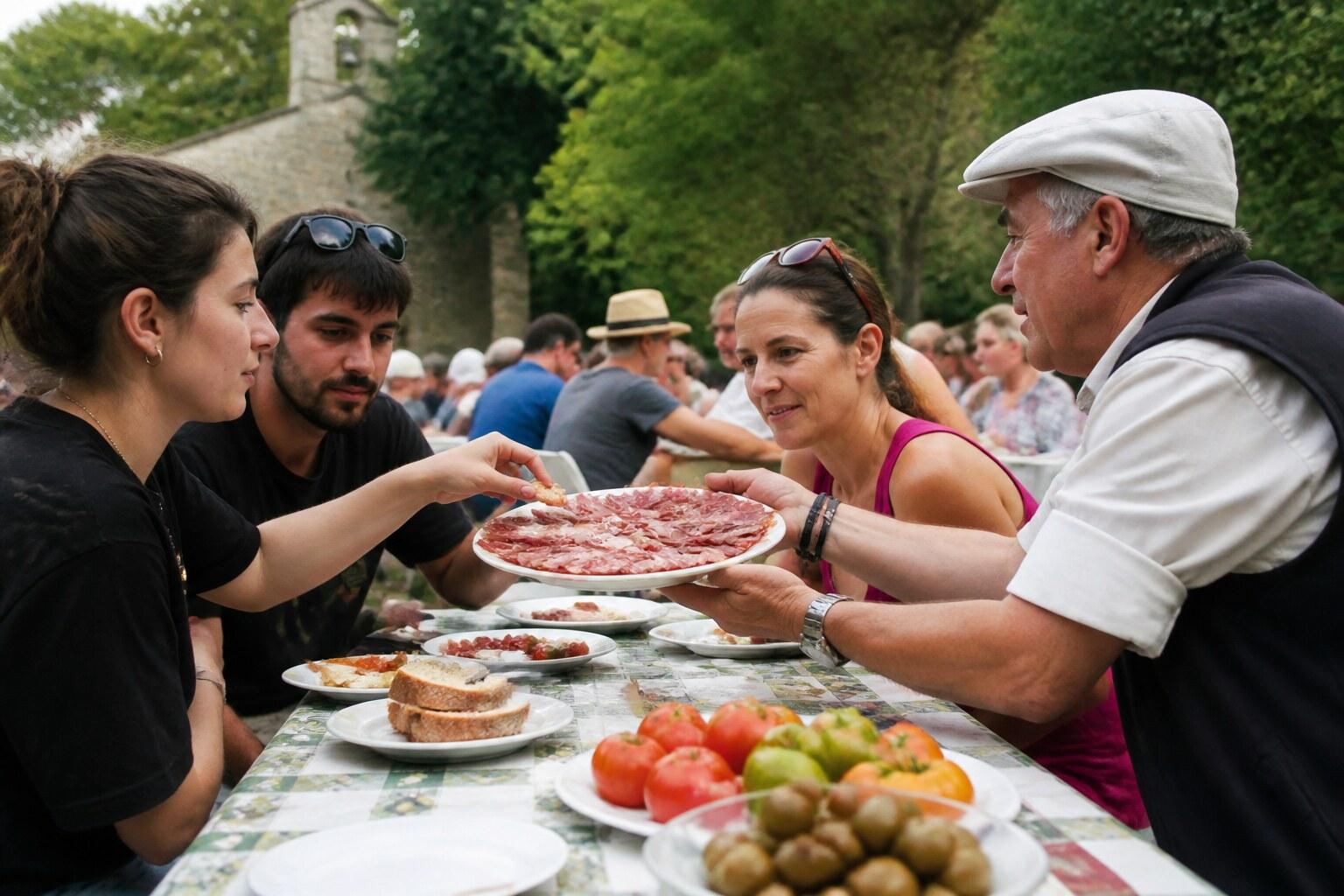
A dinar popular may require a ticket bought days ahead, while nearby families may bring their own food and sit in established groups. Do not assume every long table is open seating. Find the ticket desk or ask an organizer where visitors should sit.
Queue at the pace of the volunteers, carry your own place setting when instructed and clear the space according to local recycling arrangements. Dietary options can be limited; ask before buying rather than expecting the kitchen to rebuild a fixed communal dish at service time.
A friendly conversation does not entitle a close portrait. Ask before photographing diners, children or people preparing food. Wide images of a public gathering are less intrusive than documenting an unfamiliar family’s table.
Weather can cancel the form, not justify imitation
Use the official municipal or organizer channel when rain, heat or fire risk affects the day. An indoor transfer, reduced programme or postponement may be announced late. Do not light your own grill, start an unofficial dance in a restricted space or follow a religious group into a private building because the planned outdoor act disappeared.
Leave before the last organized transport unless you have a confirmed alternative. Thank volunteers when there is a natural moment and take every item you brought. The respectful visitor does not need to become the centre of the aplec; understanding how place, community and repeated annual practice hold it together is already participation.
Related guides
- Three Kings in Catalonia: Parade, Gifts and Visitor Etiquette
Watch a Catalan Three Kings cavalcade with context, understand the pages and letters, and keep the public parade separate from private family gifts.
- La Patum de Berga: A First Visit to Fire and Crowd
Choose the right Patum session, understand Plaça de Sant Pere’s crowd and fire, and secure a walkable bed or confirmed return.
- Festa Major: How to Join a Catalan Town Festival Respectfully
Read a festa major programme, choose events, handle fire and crowds, and take part without treating a neighbourhood tradition as a show.
Are you in the know?
Receive new articles, local updates, and occasional offers from selected partners. We never share your email address. Unsubscribe at any time.
By subscribing you agree to our privacy policy.