Culture
Catalan Living Nativity Scenes: How to Visit a Pessebre Vivent
Choose a Catalan living nativity by format and terrain, then handle tickets, winter conditions, religious context and photography respectfully.
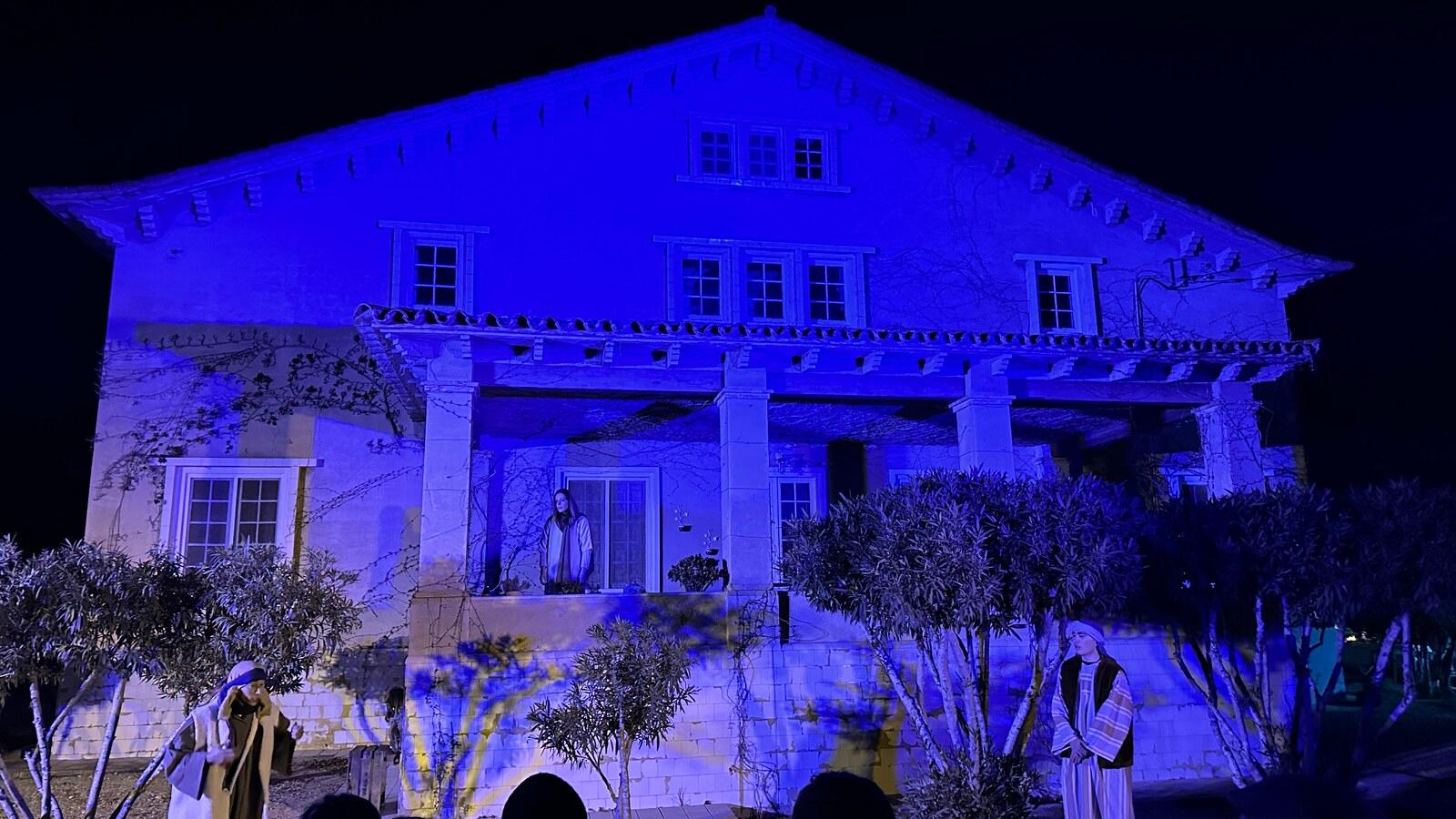
A pessebre vivent is not one Christmas show reproduced around Catalonia. One village moves visitors past silent tableaux in a forest; another stages spoken scenes in its streets; another builds a single guided performance around local music. Choose by format, route surface and winter tolerance, then buy the exact pass. Fame matters less than whether your group can complete that particular night outdoors.
The phrase means “living nativity,” but the event often extends beyond the stable. Volunteer figurants present the Annunciation, the journey to Bethlehem, shepherds, the birth of Jesus and the arrival of the Magi alongside blacksmiths, spinners, potters, farm workers and domestic scenes. The result joins Christian narrative to a community’s memory of rural work.
Start with the federation calendar, then open the local page
The Federació de Pessebres Vivents de Catalunya gathers a calendar, map, member list and central ticket links. Use it to find the season’s possibilities, but finish the decision on the organiser’s own page. The local listing should answer six questions:
| Question | Why it changes the visit |
|---|---|
| Is it a fixed pass or a free-flow route? | A timed group cannot absorb a late arrival; a free circuit may allow more pauses |
| Is it silent, narrated, spoken or moving? | The language and need for stillness differ |
| How long and steep is the route? | “Family activity” does not mean pushchair- or wheelchair-accessible |
| Where is the meeting point? | It may be well away from the first visible scene |
| Are tickets advance-only? | Some editions keep no box-office allocation |
| What happens in rain? | Outdoor scenery, animals and electrical equipment make cancellations plausible |
Do not assume dates repeat from the previous Christmas. Most seasons run across selected evenings from December into early January, not every night. Some productions are biennial, and a village can pause an edition. Buy after the current schedule appears, not from a roundup that still ranks last year’s events.
The format matters more than the number of scenes
At Castell d’Aro, the last published municipal event page described tableaux extending from the medieval centre into the natural Vall de la Coma, with biblical episodes, traditional trades and rural life presented by more than 300 participants. A route of that scale is an outdoor walk as well as a performance.
At Els Prats de Rei, the Generalitat’s cultural-agenda description emphasises spoken acting and music composed for the production. Streets and squares become the stage, with biblical narrative, animals and a street of traditional trades. That is a different listening commitment from passing a sequence of still scenes.
Les Gunyoles d’Avinyonet organises visitors into timed groups before the route. Bàscara combines an introductory performance with the circuit through the old centre and Fluvià landscape. Corbera uses the rocky Penya del Corb setting. These are not minor branding differences: they decide how much you walk, whether the group controls your pace and how important spoken Catalan is to following the sequence.
If your Catalan is limited, a silent or visually led route may be easier. A spoken pessebre can still be worthwhile, but read a short Nativity outline first and accept that the actors are performing for the whole audience, not offering live translation between scenes.
Buy the session before solving dinner and transport
Popular passes can sell out, especially between Christmas Day and New Year. Prices vary by organiser and age. As reference points rather than promises, Castell d’Aro’s 2025–26 listing charged €6 for visitors over 14 and €3 for ages four to 13, while Els Prats de Rei’s 2025 programme listed €10 general and €7 for children aged five to 12. Use the amount attached to your chosen date.
Check whether the ticket is for an arrival window or a performance start. If the organiser asks visitors to meet 30 minutes early, that time is functional: groups are formed, tickets checked and the audience led to a controlled entrance. Turning up at the first scene can put you on the wrong side of the route.
Save the ticket offline and read its cancellation or exchange conditions before booking a non-refundable meal. Rain may cancel one evening while the next goes ahead. A central federation platform does not mean every production follows the same refund procedure.
Finish transport planning from the actual exit time. A 19:00 start followed by a 60–90-minute route, a walk back to parking and holiday traffic can easily outlast a rural bus. If public transport cannot get you home, stay nearby or choose a production with a reliable connection; do not improvise a roadside walk in the dark.
Dress for a slow outdoor night, not a theatre foyer
Standing beside a tableau feels colder than walking continuously. Wear warm layers, a waterproof outer layer, gloves and closed shoes with grip. Avoid an umbrella in narrow groups unless the organiser recommends it; hoods keep sightlines and pathways clearer. A small torch can help before or after the route, but keep it off during scenes.
Bring as little as possible. A bulky backpack catches in tight lanes, and a pushchair that works on a paved square may fail on steps, gravel or a woodland slope. Give children a final toilet stop before assembly and carry one quiet snack for after the route rather than opening wrappers in a silent scene.
There may be smoke from hearths, farm animals, darkness, recorded narration, sudden music and long periods of stillness. “For all audiences” does not guarantee that every child will enjoy those conditions. Explain that the people may remain motionless and that the route cannot always stop when one visitor wants to leave.
Read the religious story and the work scenes together
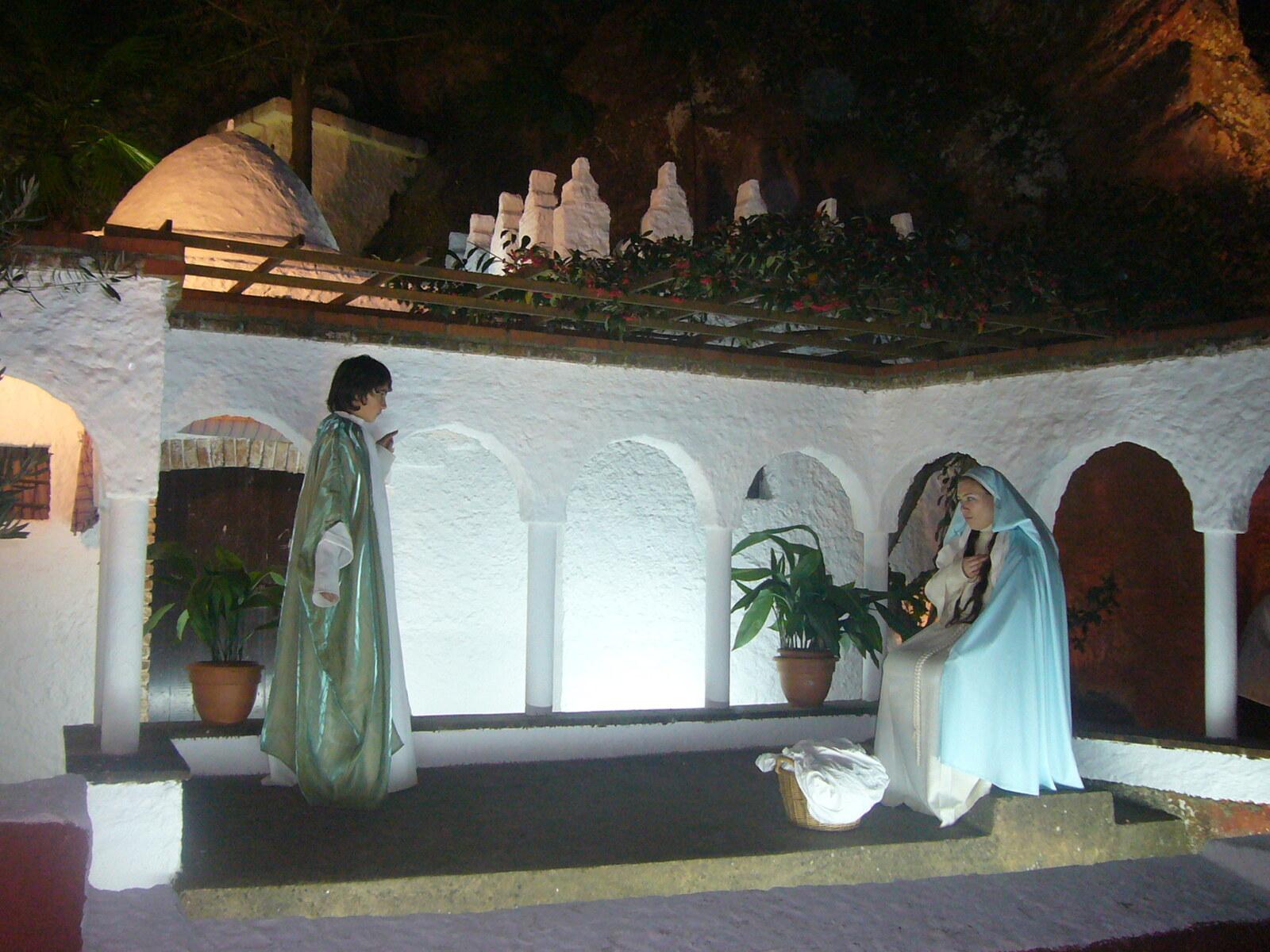
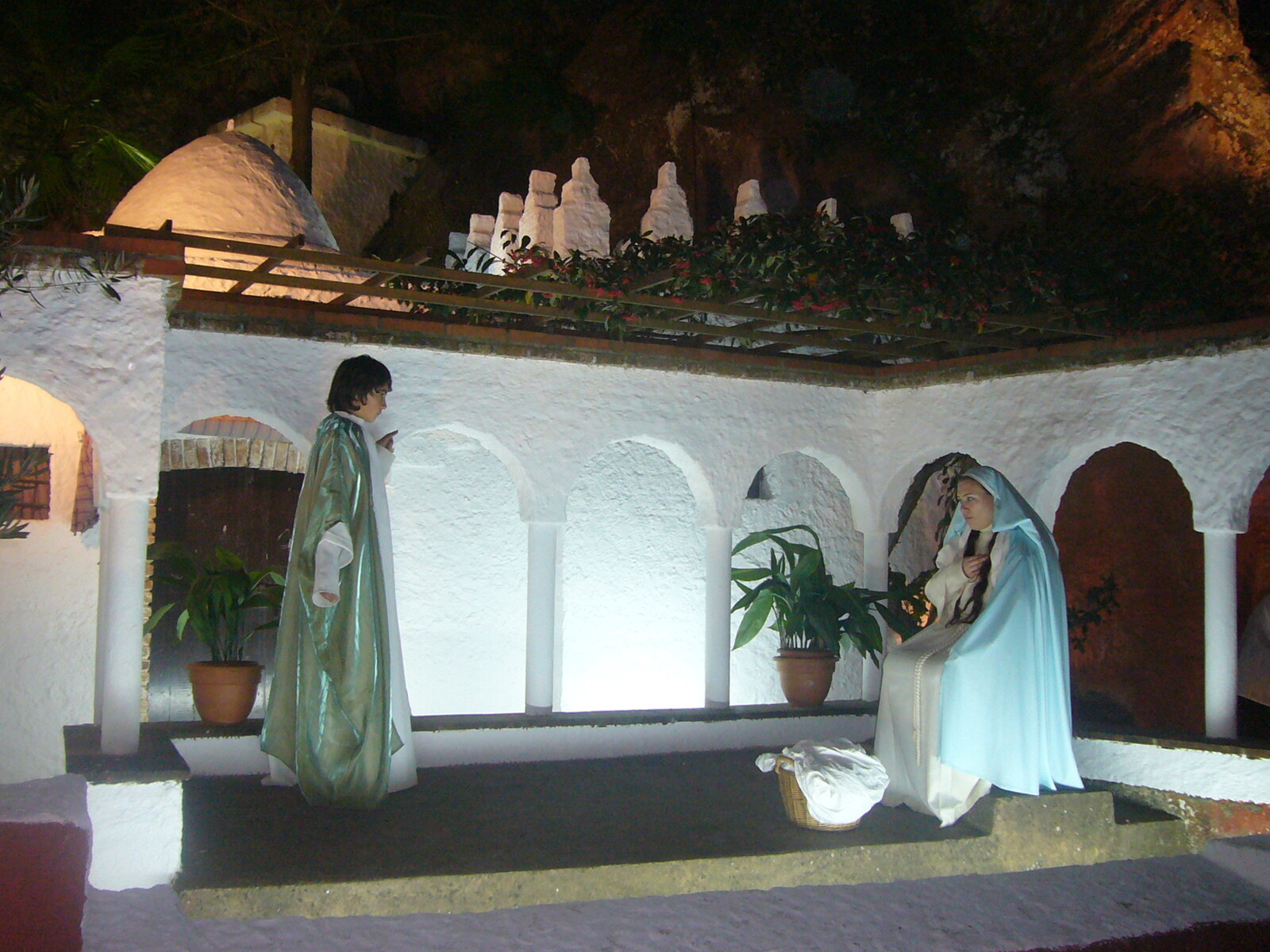
The core remains the Christian Nativity. The Annunciation tells Mary that she will bear Jesus; the census and journey bring Mary and Joseph to Bethlehem; the stable and shepherds frame the birth; the Magi arrive later in the sequence. A visitor does not have to practise Christianity to recognise that these scenes are sacred narrative rather than fantasy décor.
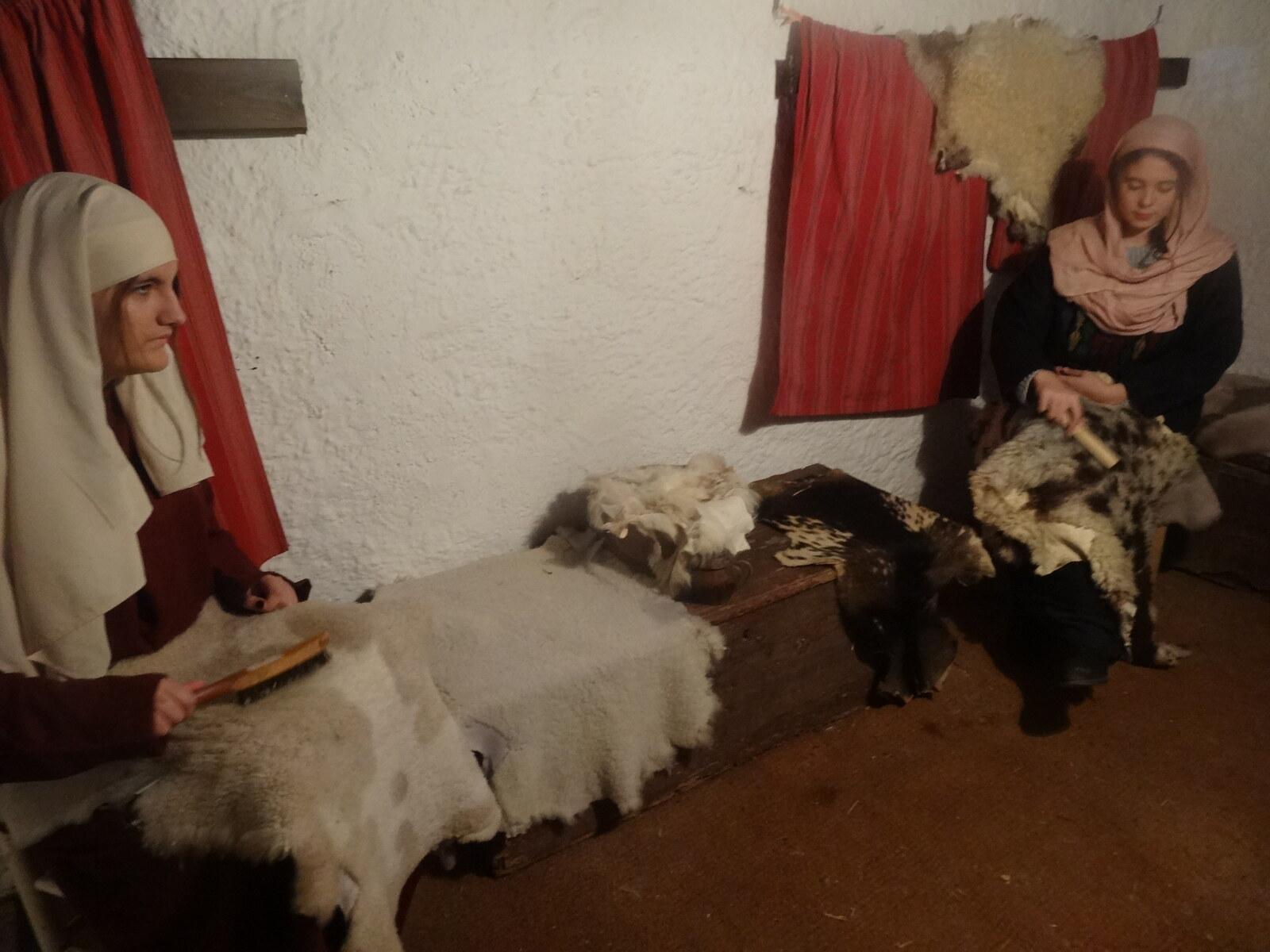
The old trades make the Catalan form more locally specific. Weaving, basket making, smithing, washing, baking and animal care place the biblical story inside an imagined pre-industrial village. They are not an evidence-based reconstruction of ancient Palestine. They preserve gestures, tools and forms of work familiar to the community that stages them.
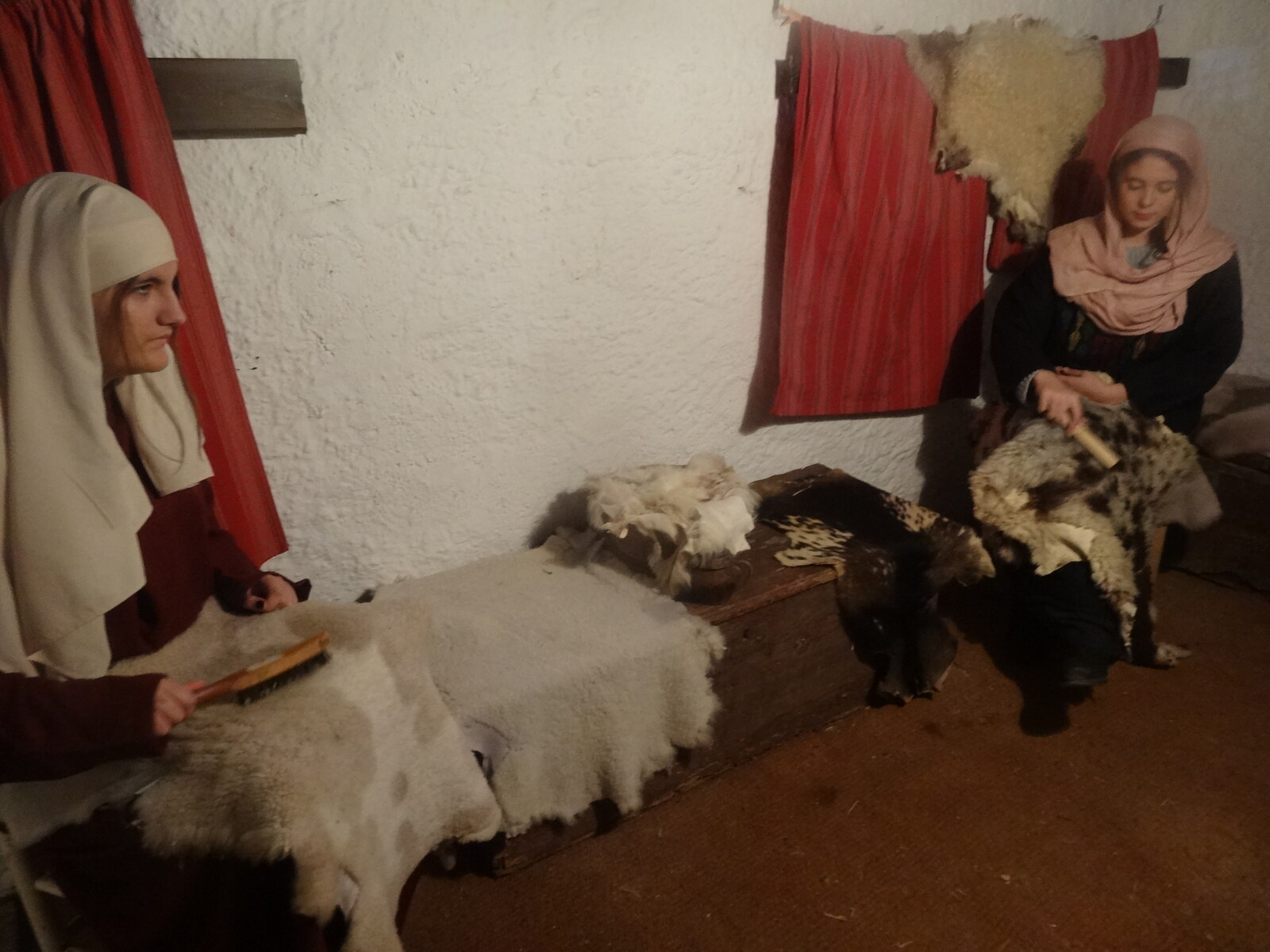
Notice the labour behind the event too: costumes made and repaired, private or municipal spaces lent, lighting installed, animals cared for and several generations holding a pose or repeating a scene in winter temperatures. An admission fee supports a volunteer production; it does not purchase personal access to its performers.
Photography begins with the organiser’s rule
Look for a published photography policy and listen to the opening announcement. If flash is prohibited, switch it off before entering—not after the first accidental burst. Flash breaks the intended lighting, distracts actors and animals, and turns a religious tableau into a studio setup. A phone screen at full brightness also illuminates the people behind you.
Take a few wider photographs from the visitor path when permitted. Do not cross a rope, lean into a scene, ask a motionless actor to look at the camera or hold a group in place while composing multiple versions. Children may be among the figurants; avoid making an identifiable child the isolated subject of a public post.
Silence your shutter and notifications. In a spoken production, do not record whole scenes or narration unless the organiser explicitly allows it. The visitor’s right is to attend the pass purchased, not to reproduce the production.
Animals are part of some events, but they are not a petting area. Do not feed, touch or call to them. Leave your own dog at home unless the organiser clearly permits animals and can separate them from livestock.
Accessibility must be confirmed with the production
Historic streets and natural slopes create genuine barriers. “Accessible town” and “accessible pessebre route” are not the same claim. Ask about surface, steps, gradients, darkness, seating and accessible toilets, and describe the visitor’s actual need rather than asking only whether the event is accessible.
The current l’Espluga de Francolí access guidance is unusually specific: it identifies stairs and steep slopes, asks families not to use pushchairs, and offers a smaller accessible selection of scenes with volunteer accompaniment. Its meeting point is at the old church of Sant Miquel, half an hour before the session, rather than at an individual tableau.
Corbera’s access page describes reserved arrangements for people with reduced mobility and asks visitors to telephone in advance so staff can provide appropriate assistance. That is a model for planning, not proof that another village offers the same solution.
If the accessible subset omits half the route, describe that honestly to the group before buying. A shorter adapted visit can be the right experience; discovering the limit after a cold journey is not.
Leave by the visitor route, even when the night goes wrong
If a child becomes cold, someone feels unsteady or smoke becomes uncomfortable, tell a steward and use the directed exit. Do not cut behind a tableau, through animal pens or across private property. The shortest-looking line on a map may cross the working side of the production.
For heavy rain or a cancelled session, follow the organiser’s transfer or refund instruction. Do not turn up at another date assuming unused tickets will be honoured. A static municipal pessebre, a nativity exhibition or a daylight visit to the village can preserve the cultural context without pretending to replace the live performance.
The most respectful visit is not the one that photographs every scene. It is the one that chooses a route the group can actually complete, arrives at the right meeting point, understands why biblical episodes and local trades share the stage, and lets a community perform on its own terms.
Related guides
- Three Kings in Catalonia: Parade, Gifts and Visitor Etiquette
Watch a Catalan Three Kings cavalcade with context, understand the pages and letters, and keep the public parade separate from private family gifts.
- Revetlla de Sant Joan: Fireworks, Bonfires and Etiquette
Understand Catalonia's 23 June midsummer night, where public events end and private celebrations begin, and how to handle fireworks safely.
- Catalan Names and Surnames: How to Address People Politely
Read common Catalan name patterns without guessing, preserve accents and surname order, choose an appropriate form of address and repair mistakes politely.
Are you in the know?
Receive new articles, local updates, and occasional offers from selected partners. We never share your email address. Unsubscribe at any time.
By subscribing you agree to our privacy policy.