Culture
Catalan Names and Surnames: How to Address People Politely
Read common Catalan name patterns without guessing, preserve accents and surname order, choose an appropriate form of address and repair mistakes politely.
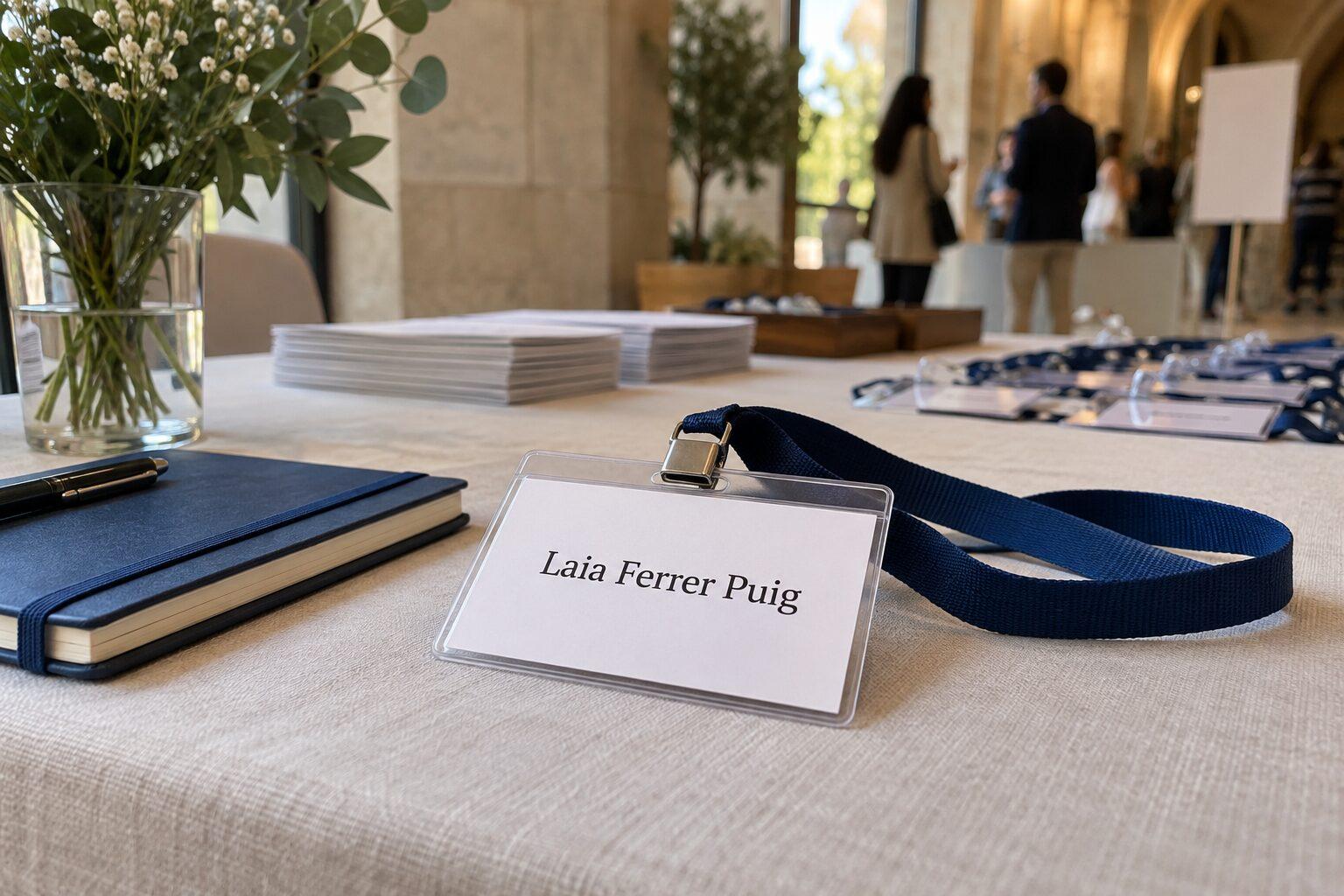
The polite choice is simpler than decoding a naming system: use the name a person gives you, in the order and form they give it. Keep the accents, particles and spaces. In ordinary conversation, begin with the given name you heard. On a formal list, ticket or email, copy the whole displayed form instead of deciding that the final word must be the only surname.
Suppose a fictional attendee introduces herself as Laia Ferrer Puig. Laia is the given name; Ferrer and Puig are surnames in a common Spanish and Catalan legal pattern. Addressing her as Laia is natural once she has introduced herself. Filing the booking under Puig alone because it appears last can separate it from the identity document or from a list indexed under Ferrer.
That example is a reading aid, not a rule for identifying every person. Catalonia includes compound given names, compound surnames, names from many legal systems, one-surname forms and personal choices that a three-word formula cannot predict. A name tells you what to call someone; it does not reliably tell you their birthplace, home language, politics, gender or family history.
Ferrer Puig is not a first-name/last-name puzzle
In the common two-surname pattern, the first surname is followed by a second surname. The current Civil Registry Law says that when two lines of parentage are established, the parents agree the order of their respective first surnames before registration. The historic paternal-first habit remains visible in many adult names, but it is not a safe legal rule for predicting a child’s surname order now.
The chosen order is also used for later siblings with the same parentage. That matters when a visitor meets a household: do not “correct” siblings because their surnames differ from an old expectation, and do not assume that spouses or partners share a family name.
The conjunction i, meaning “and,” sometimes appears between surnames: Ferrer i Puig. It can make the two parts easier to see, but it is not compulsory and should never be inserted as decorative Catalan. The law permits i or y between surnames on request. Preserve it when the person uses it; omit it when they do not.
Particles can also belong to a name, and a surname may contain more than one written word. Counting tokens from the right is therefore an unreliable shortcut. The dependable sources are the person’s own introduction and, for administrative work, the identity document used for that transaction.
A Catalan given name is not yours to translate
Jordi and Jorge, Joan and Juan, Josep and José, or Mercè and Mercedes may be related language forms. They are not interchangeable labels for an individual. If someone writes Jordi, reply to Jordi—not Jorge because the conversation moved into Spanish, and not George because your message is in English.
The University of Barcelona’s names-and-surnames guidance tells its writers to retain given names in the language in which they are supplied and to use the same form consistently. That editorial rule translates well into social courtesy. The Civil Registry Law separately allows a registered given name to be replaced by its equivalent in any Spanish language on request; that is the name holder’s decision, not a conversational translation exercise.
Accents are part of the written form: Núria, Àlex, Martí, Mercè. If your keyboard makes an accent difficult, copy the name from the email signature or programme rather than silently simplifying it. Search systems may be forgiving, but a carefully addressed message should not rely on that forgiveness.
Compound given names require the same restraint. Someone introduced as Josep Maria, Maria del Mar or Anna Maria may use both parts, one part or a nickname. Mirror the introduction. Do not decide where the “real first name” ends by looking at the spaces.
Let the introduction set the level of formality
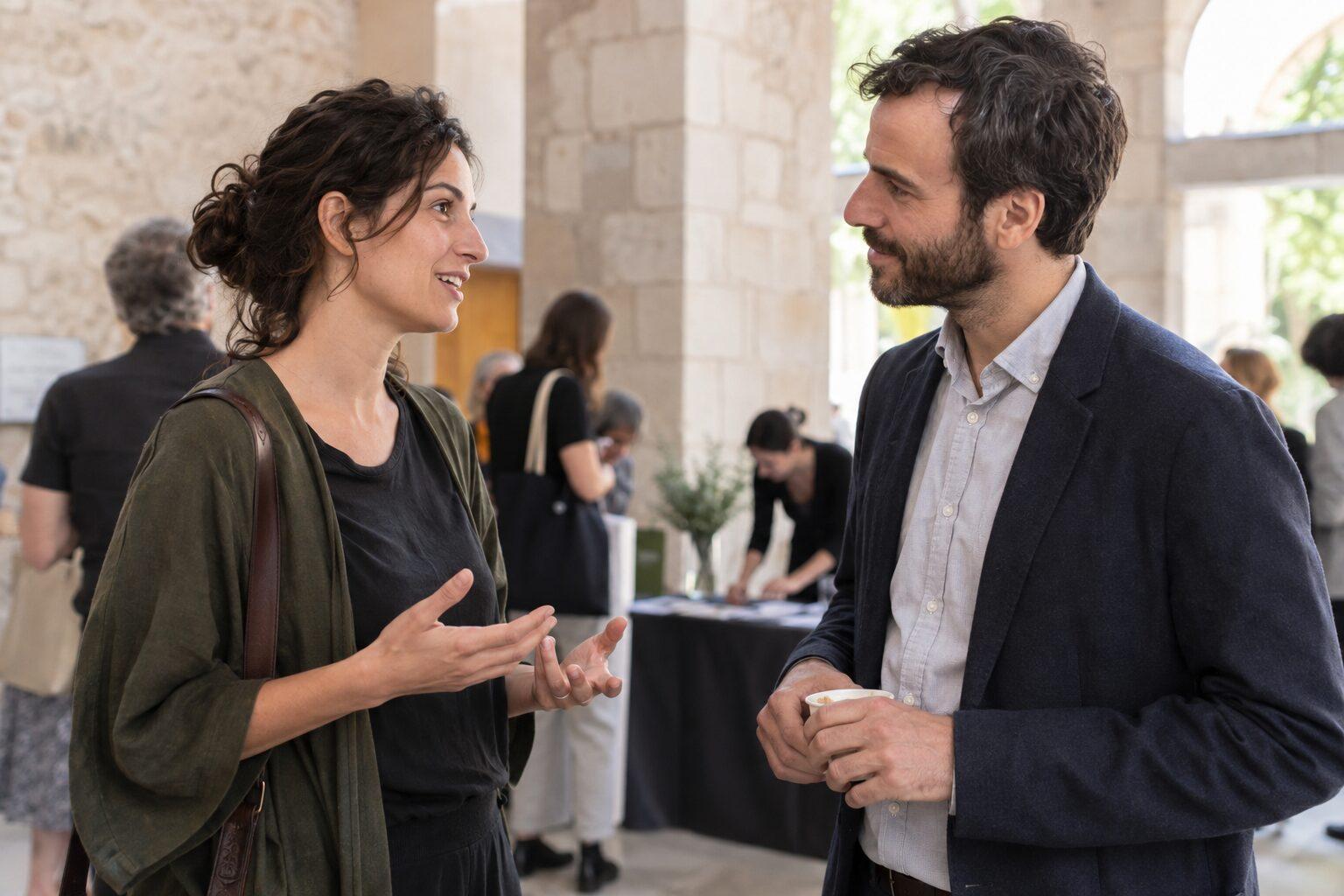
Everyday interactions in Catalonia commonly move quickly to a given name and tu, especially among colleagues, hosts, guides, shop staff and people of similar age. You do not need a title to make an exchange polite. A clear bon dia, attentive listening and the correct name carry more social value than an elaborate form used without confidence.
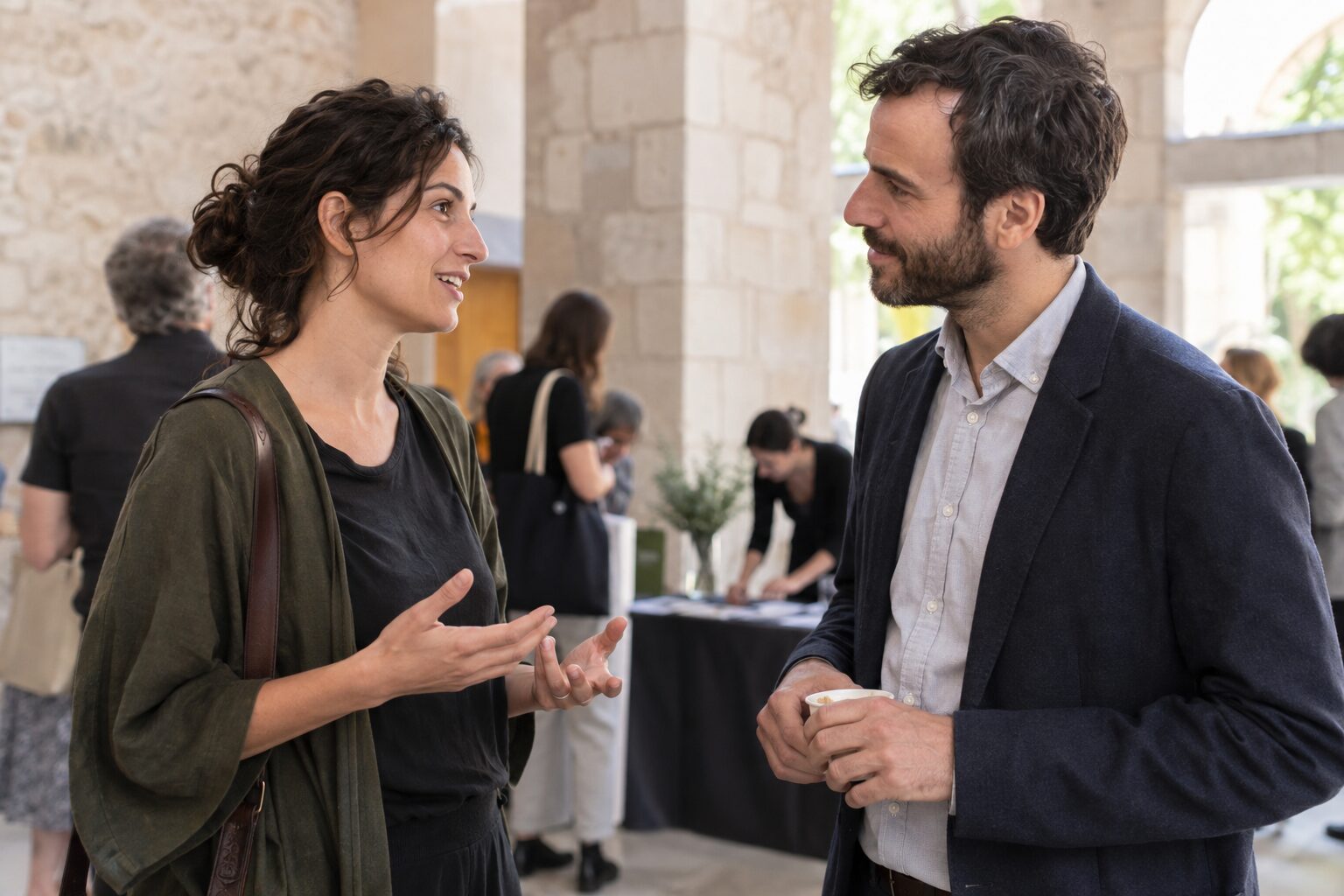
In a ceremony, formal appointment or traditional service setting, senyor or senyora plus a surname may be appropriate when the person’s title and gendered form are already known. Do not use either merely to guess gender from a given name. Catalan don and donya are not the neutral equivalents to reach for in ordinary Catalan address; senyor and senyora are the general forms.
Written conventions differ slightly from speech. Optimot’s treatment guidance uses lower case for a full treatment inside running text—el senyor Camps, la doctora Costa—and capitals for abbreviations such as Sr., Sra., Dr. and Dra. Professional titles belong where the institution or person actually uses them; adding doctor to make a routine exchange sound respectful can feel more awkward than a correct name.
Vostè and vós are not upgrades to ordinary courtesy
Vostè is a formal singular “you” with third-person verb forms. It can express respect, but also distance. It is useful when the setting clearly calls for formality or when the other person establishes it. Using it automatically with every older adult can create a social boundary they did not ask for.
Vós takes second-person plural forms while referring respectfully to one person. Visitors are more likely to encounter it in administrative wording—us informem, la vostra sol·licitud—than to need it in casual speech. Optimot recommends vós for administrative correspondence partly because it avoids some ambiguity and gender marking created by vostè.
For a traveler, the useful sequence is:
- begin with a greeting and the name or neutral role already supplied;
- follow the other speaker’s tu or formal cue;
- if the context stays unclear, keep the sentence polite without forcing a pronoun;
- in an email, mirror the greeting, name and level of formality in the reply.
Good manners are not a grammar examination. A warm, simple sentence with one imperfect verb is better than a ceremonious formula that misnames its recipient.
Ask for pronunciation without requesting a life story
If you did not hear a name, ask immediately while the introduction is still happening. In informal Catalan, “Perdona, com es pronuncia el teu nom?” means “Sorry, how is your name pronounced?” A more formal version is “Perdoni, com es pronuncia el seu nom?”
Listen to the answer and repeat the name once, at normal volume. The goal is confirmation, not a public performance of every sound. If a busy reception is too loud, ask the person to point to the name on the badge or programme. Do not invent an English-friendly nickname to avoid trying.
A person may offer a shorter form after hearing your effort. Use it because they offered it, not because you have judged the full name inconvenient. Conversely, do not insist on the official long form when someone has introduced themselves with a familiar one.
Tickets and forms need the document version
Conversation can follow preference; a transport ticket, hotel registration or official appointment must match the identity document required for that transaction. Enter all given names and surnames in the fields indicated by the operator. If a form offers only one “surname” box, enter the complete surname string used on the document unless the operator explicitly instructs otherwise.
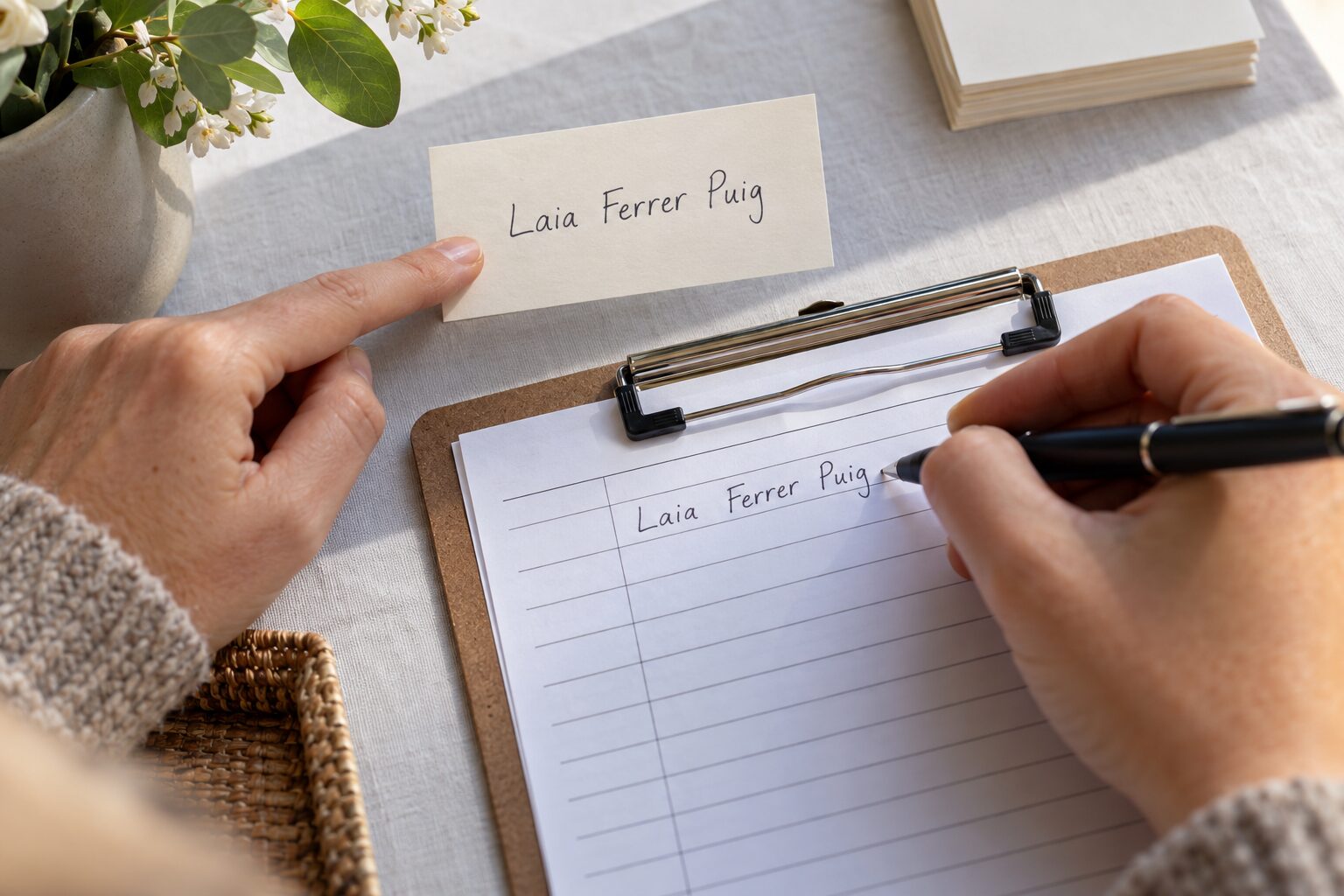
Do not reverse the surnames, add a hyphen, invent an i, or drop the second surname because the interface looks designed for a different naming convention. Those changes may produce a display that seems tidy while creating a mismatch at check-in. If the field rejects spaces, accents or length, save a screenshot and ask the operator how it wants the document name represented.
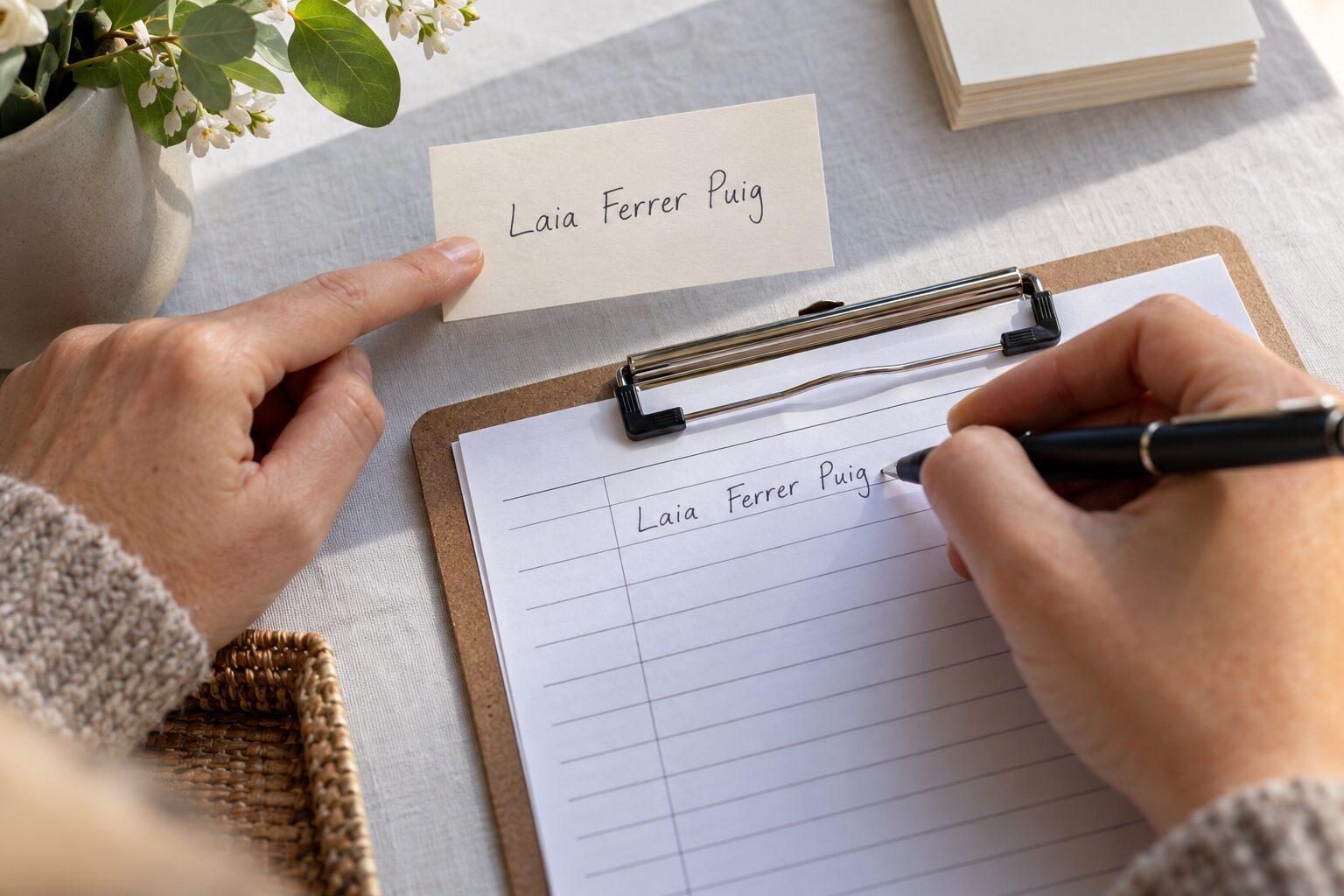
For an informal event list, copy the registration exactly and search by the whole string. Many local lists sort a two-surname name under the first surname, so Laia Ferrer Puig may appear under F rather than P. A badge may display only Laia by choice while the back-office record retains the complete form; one is social display, the other administrative matching.
Correct the name, then let the conversation continue
If you used the wrong form, the repair should be shorter than the mistake. Say: “Sorry—I used the wrong name. Is Laia correct?” Then use Laia. If the issue is the surname, ask the contextual question: “Should I list you under Ferrer, or use Ferrer Puig in full?”
Do not explain that the name was unusual to you, compare it with another culture or ask which parent supplied which surname. Do not require reassurance that the error was harmless. Correct the badge, contact record or booking while the right form is in front of you.
The same recovery works after translating a name without permission or dropping an accent: apologise once, repeat the correct form, update what you control and move on. If the person changes the language of the conversation at the same time, follow that cue separately. Their name never obliged them to speak Catalan, Spanish or English with you.
Respectful address is therefore not a matter of mastering every possible Catalan surname. It is the smaller discipline of noticing what a person has already told you—and resisting the urge to replace that information with a rule you think you know.
Related guides
- Three Kings in Catalonia: Parade, Gifts and Visitor Etiquette
Watch a Catalan Three Kings cavalcade with context, understand the pages and letters, and keep the public parade separate from private family gifts.
- Catalan Living Nativity Scenes: How to Visit a Pessebre Vivent
Choose a Catalan living nativity by format and terrain, then handle tickets, winter conditions, religious context and photography respectfully.
- Revetlla de Sant Joan: Fireworks, Bonfires and Etiquette
Understand Catalonia's 23 June midsummer night, where public events end and private celebrations begin, and how to handle fireworks safely.
Are you in the know?
Receive new articles, local updates, and occasional offers from selected partners. We never share your email address. Unsubscribe at any time.
By subscribing you agree to our privacy policy.