Culture
Rumba Catalana: Barcelona Roots and Where to Hear It
Discover Barcelona’s rumba catalana roots through neighbourhood context, confirmed live programmes, respectful listening and evening logistics.
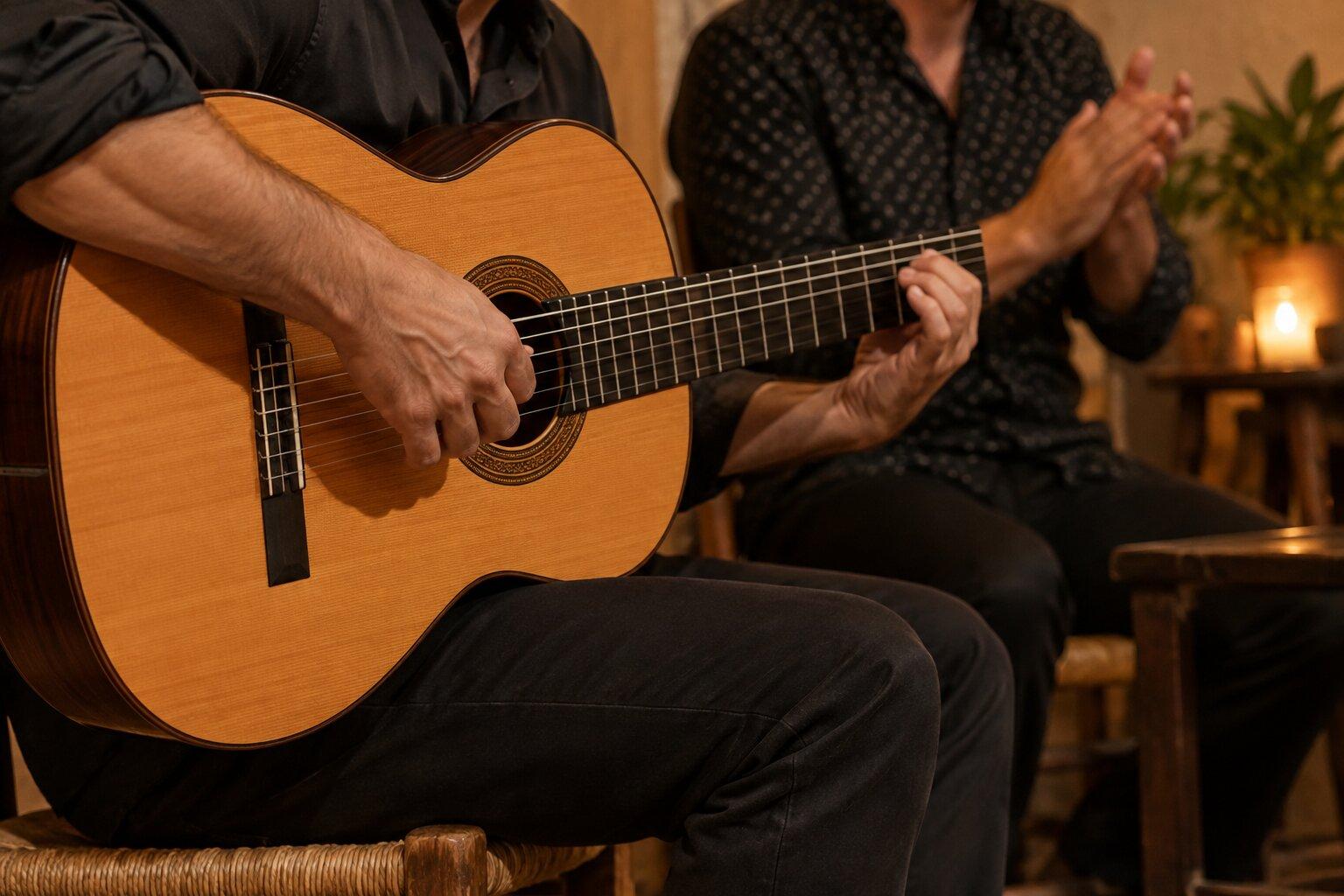
Rumba catalana is part of Barcelona’s living musical history, rooted particularly in its Romani communities. Start with the musicians and repertoire when choosing a show: a general Spanish-guitar or flamenco programme may contain little Catalan rumba.
A useful visitor plan combines a short daylight neighbourhood walk with a separately confirmed concert. Allow 45–60 minutes around Plaça del Raspall in Gràcia or Carrer de la Cera in the Raval, then travel to the actual evening venue. Public festival performances can be free; for a ticketed set, keep an editorial allowance of €15–30 per person and check the event's real price, start time and admission conditions before dinner.
Hear the guitar’s rhythmic role in rumba catalana
Listen to the guitar as a percussion instrument as well as an accompaniment. Its rhythmic attack works with handclaps and voices, while the singer’s phrasing can pull against or settle into the beat. A few recordings before the trip make those exchanges easier to hear live.
The city's public broadcaster, betevé, documents the subject through musician Peret Reyes's account of Carrer de la Cera. His recollections distinguish traditions associated with Gràcia, Hostafrancs and the Cera area rather than presenting one uniform neighbourhood sound. Treat these as the testimony of a participant in the tradition, not a reason to rank one district as more authentic than another.
Names such as Peret and El Pescaílla are useful entry points for listening before the trip. Hear more than one recording and notice how different singers phrase a line or how the ensemble changes the energy. You do not need to understand every word to follow the music, and you should not assume every rumba catalana song is sung in Catalan. The genre's name is not a language requirement for each performance.
Plaça del Raspall gives Gràcia a human scale
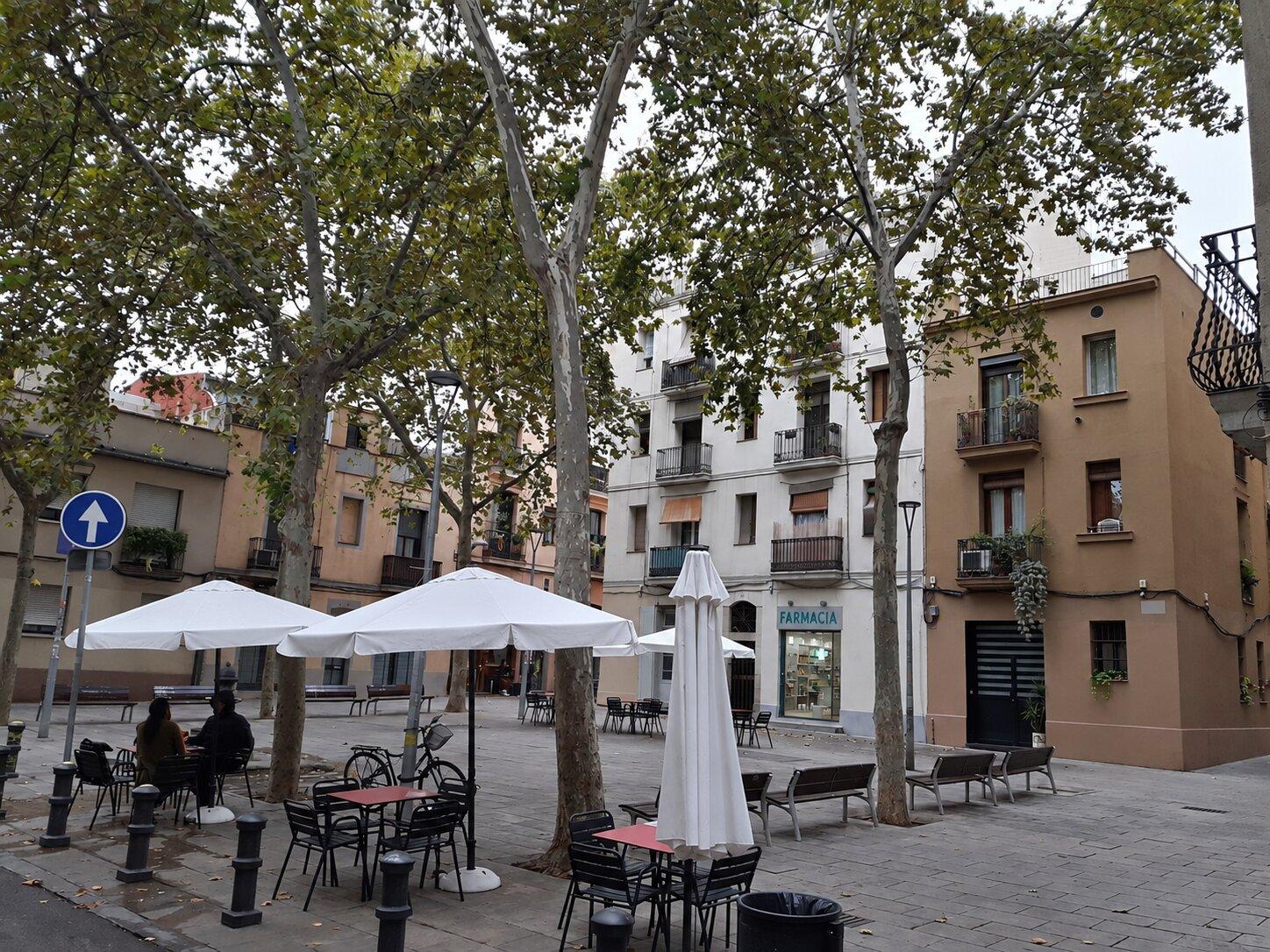
For the Gràcia option, arrive via Fontana metro and walk through the neighbourhood towards Plaça del Raspall, allowing around 20 minutes at an easy pace. The route passes through ordinary residential streets, with cafés where you can stop along the way. The square and surrounding streets remain residential spaces throughout the day.
Barcelona’s literary route through Gràcia supplies context for the walk. There is no regular public performance implied by a visit to Plaça del Raspall; choose an announced concert for the musical part of the day.
Stop at a local café if you want to linger in the square. Keep residential entrances clear and ask before taking close photographs of people.
Carrer de la Cera is another distinct starting point
The Raval option works from Sant Antoni metro, with a short walk towards Carrer de la Cera. Give yourself time to look at the street's public tributes to rumba and then continue to a nearby café. Avoid trying to link Gràcia, Hostafrancs and the Raval on foot in one hurried hour; these are separate neighbourhoods, not adjoining stops in a compact music quarter.
Allow separate travel time to the evening venue. The Raval’s place in rumba history does not mean the nearest bar will have a live set that night.
Find the set before choosing the dinner table
One concrete lead is Flamenco Barcelona's programme in Gràcia, which explicitly presents flamenco and rumba catalana. Read the named show and performers carefully: a mixed programme may contain only part of a set devoted to rumba. Confirm the performance date, venue address and repertoire through the organiser before paying.
Information checked September 2026. Event availability and prices are date-specific, so the €15–30 allowance is an editorial estimate rather than an advertised fixed tariff. Ask whether seating is guaranteed, whether a drink is included, whether the room has a minimum purchase and whether children may attend. A table reservation at a bar is not necessarily a concert ticket.
Neighbourhood festivals and the city's La Mercè programme are another way to find announced performances. Search the current edition for the artist and genre, then verify the stage and time. An old festival listing proves that a band played there once; it does not establish a recurring annual or weekly appearance.
Book dinner near the confirmed venue, allowing time to eat before doors open. If the performance begins late, check the return through TMB's journey planner for that day of the week. Do not assume metro operating hours are identical every night.
Join the audience on its own terms
Arrive early enough to settle without interrupting the opening. Follow the room's lead on clapping and dancing, keep conversation low during quieter passages and avoid holding a phone above other people's sightlines for an entire song. Ask about filming if you want more than a brief personal clip; musicians' willingness to perform publicly is not blanket permission to broadcast their set.
If the rumba set is cancelled, look for another announced performance that suits your dates. The neighbourhood walk can stand on its own, with Peret or El Pescaílla as listening for the journey home.
Related guides
- Havaneres in Catalonia: Understanding a Cantada
Understand havaneres and the cantada tradition, with advice on finding performances, seating, cremat, audience etiquette and late returns.
- Your First Catalan Aplec: How to Join Respectfully
Read an aplec programme, reach its rural setting and understand when a meal, dance or religious act is public, reserved or participatory.
- Tió de Nadal in Catalonia: Visitor Etiquette and Timing
Understand the Tió de Nadal as a family Christmas tradition, then join a public event or invitation without turning it into a caricature.
Are you in the know?
Receive new articles, local updates, and occasional offers from selected partners. We never share your email address. Unsubscribe at any time.
By subscribing you agree to our privacy policy.